

You know those activities that just click with kids? You try one once, and suddenly they’re begging to do it again. That’s exactly what happens with my animal mysteries. The theme hooks them instantly, and the whole “solve the mystery” setup makes them actually slow down, focus, and stick with it until the end. No more half-finished worksheets.
What I love most about animal mysteries is how flexible they are. You can use the same activity as a math mystery or a reading one, just by swapping out the clues. It’s like a low-key escape room—no crazy setup, no timers ticking down, no chaos. Just a story that pulls them in and keeps them working.
Here are a few animal mysteries that my students always remember and ask for by name.
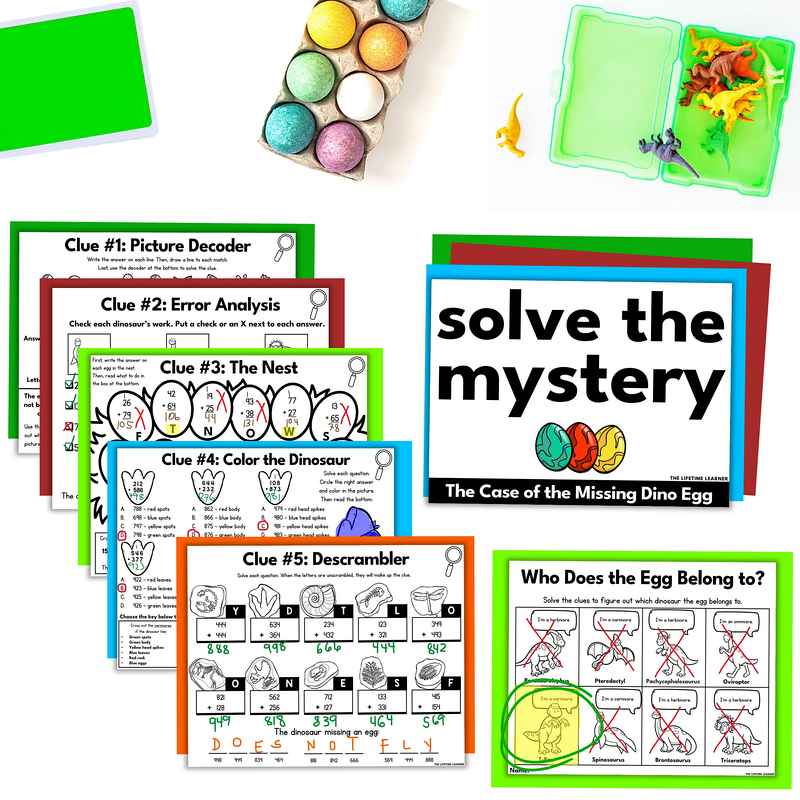
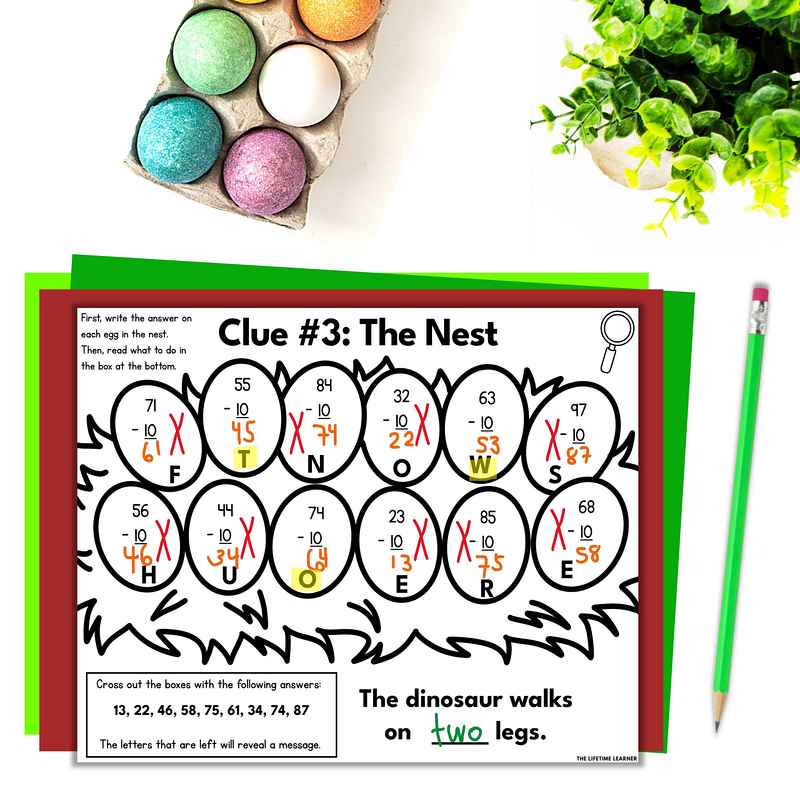

The Dinosaur Mystery is a total winner if your kids are into anything prehistoric. They jump right in, dying to figure out which dinosaur stole the egg from the nest. It feels like a fun adventure, but underneath it’s solid practice.
The clues build on each other, so they stay locked in way longer than with a regular sheet. Use the shorter 3-clue version for quicker days or sub plans, and the longer 5-clue versions when you want them really digging deep. It’s super easy to tweak the difficulty without rewriting anything.
You can run any of these animal mysteries in tons of different ways—with partners, as a whole group, in teams, at table groups, independently, for homework, on review days, as a digital review, you name it. The flexibility is one of the things that makes them so easy to drop into your week.
But to give you some fresh ideas, I’ll share one specific, unique way to use each mystery under its theme.
Idea How to Implement:
Picture this: You’re doing a whole-class session under the document camera. Start by reading the mystery setup aloud to build suspense, then project the first clue for everyone to tackle together. As they raise their hand and answer questions, it turns into this collaborative buzz where even the quieter kids jump in. By the end, they’ve not only practiced key skills but also bonded over debating dinosaur suspects. It’s a great way to energize a review day. Use the 3-clue version if you want a short review or the 5-clue version if you’d like it to last the entire class period. This is the best way to do mysteries when beginning a unit (and you want high engagement), or you are teaching whole group with a tricky skill.


Then there’s the Safari Mystery. It drops the kids straight into the African savannah where they are following clues to discover which animal the jeep just spotted. They love debating and justifying their answers in small groups or as a whole class. Print or digital, it fits whatever setup you’ve got going. Great for getting everyone talking (and the perfect way to sneak in some communication skills).
How To Use This Mystery With Your Class
Try this approach: Split your class into small safari “teams” of three or four. Give each team their own set of clues to discuss and solve step by step. This allows you to work on collaboration skills and group students up the way you know your class works best. Pair high ability students with lower ability students so everyone gets the support they need.


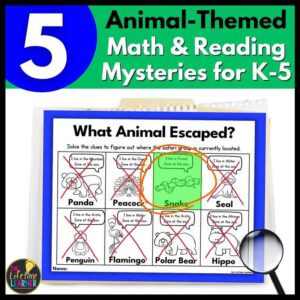
The Zoo Mystery turns your class into detectives who are trying to track down the animal who escaped from the zoo! That built-in urgency gets them excited every time; kids literally request it. This one works perfectly for math or reading, and they can do it independently during early finisher time or when a sub is in. Plus, there’s a quick directed drawing bonus for anyone who finishes fast, so no one’s just sitting there.
How To Run This Activity
One of my favorite ways to use animal mysteries is as a go-to option in the fast finisher bin. When a student finishes their main work early, they grab the Zoo Mystery packet (or access the digital version on a tablet), slip on their detective hat, and start solving the zoo-themed math clues to figure out which animal escaped. The urgent “we’ve got to find the escapee before it’s too late” storyline keeps them hooked without any prompting from me. They work through the clues independently at their own pace, using their math skills to eliminate suspects one by one until they crack the case. As a bonus, once they’ve solved it, there’s a quick directed drawing activity waiting inside so they can illustrate the escaped animal (meaning even the quickest finishers stay engaged and productive instead of wandering or bothering others). It runs so smoothly that I can just point to the bin and know the room will stay calm and focused for the rest of the period.


The Under the Sea Mystery is always a nice change of pace. Kids dive in to the activity with a scuba diver to identify the mystery sea creature spotted on the dive. Animal mysteries are a hit with all students, but the under the sea ‘vibe’ keeps kids calm and on task. When you can choose between print and digital forms, it shakes up the usual animal themes without dropping the interest level.
Imagine Using It Like This:
You could do a simple ocean transformation for the day (or even the week) with these activities as your main content. Think blue tablecloths as waves draped over desks, a few strands of blue streamer “kelp” hanging from the ceiling, some paper fish or jellyfish cutouts taped up, and maybe play soft ocean sounds from your phone or speaker. Boom! Instant underwater vibe that gets kids buzzing the second they walk in.
The best part? You can run the ocean math mystery during math block and the ocean reading mystery during reading block. It’s the same list of sea creatures as suspects, but each subject has completely different clues and a totally different outcome or culprit revealed at the end. That means students get to “dive in” twice, solving two fresh mysteries with the same theme, which doubles the excitement and gives them that satisfying repeat without any boredom.
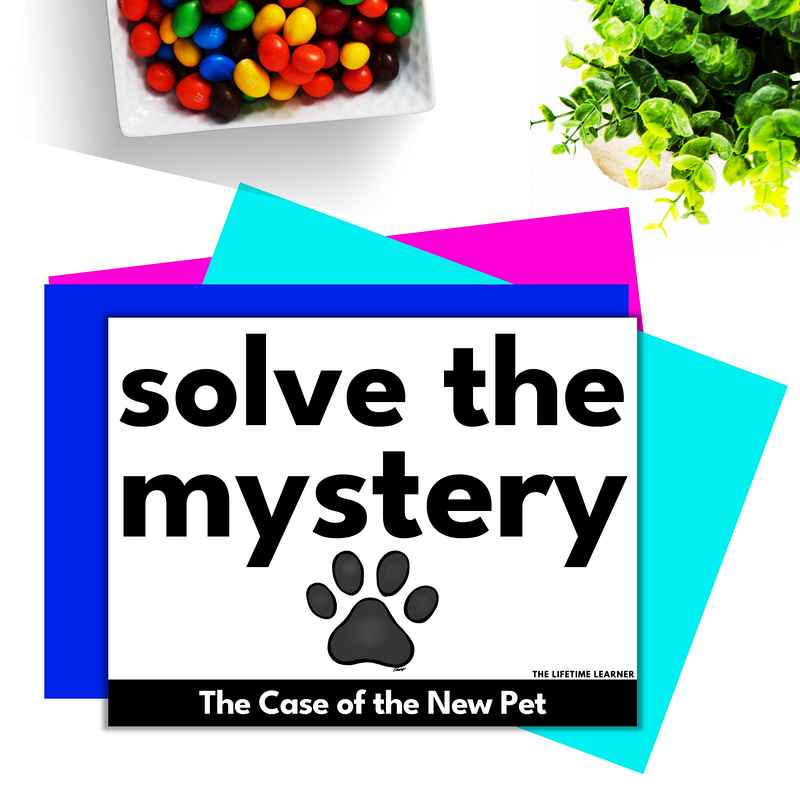
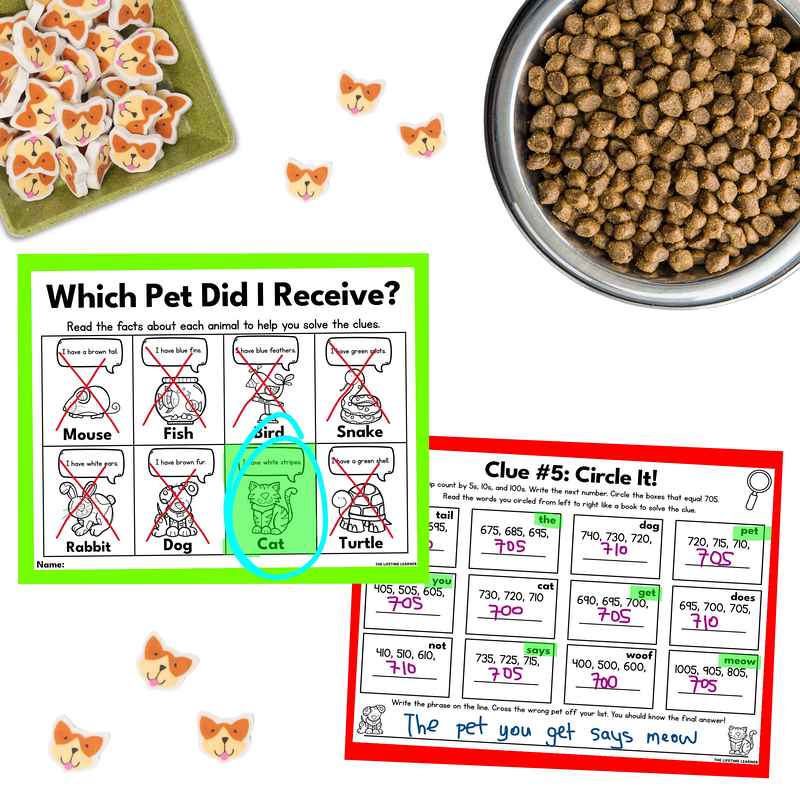
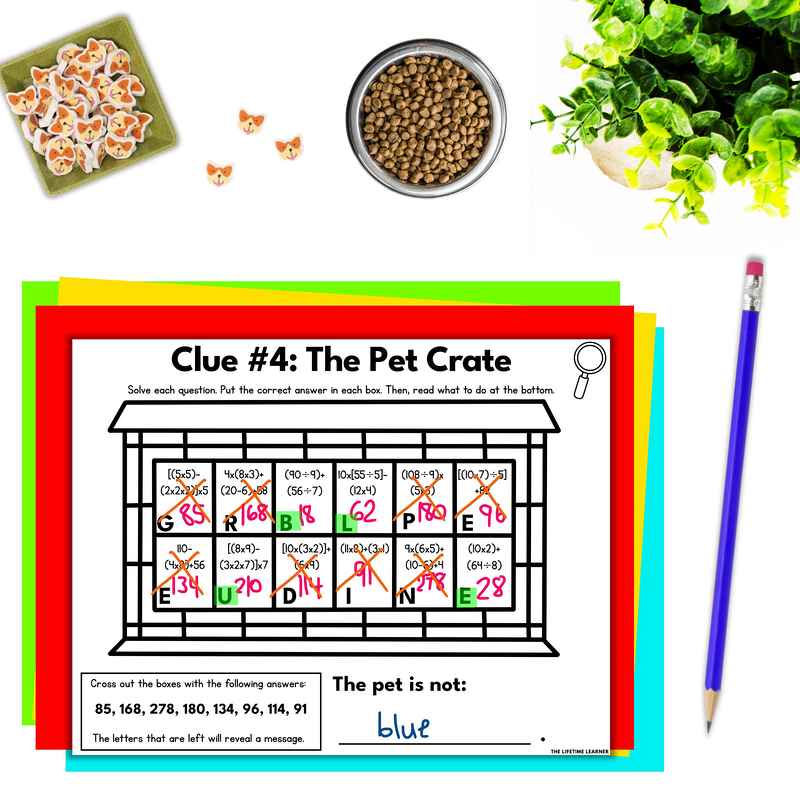
And finally, New Pet Mystery hits home for so many kids. The premise? Students solve clues to find out which pet their parents surprised them with. Because it feels personal, they get invested fast. Great for differentiation—pick fewer clues for some, more for others—and it wraps up with that satisfying “aha!” moment.
How To Use Animal Mysteries As A Tease Over Time
For a unique spin, stretch it out over the week: During daily mini-lessons, you allow students to solve just one clue each day, which builds anticipation as the week progresses. On Monday, the class tackles clue one. You leave them excited to continue the following day. By Friday, they reveal the answer when Clue 5 is completed and get to celebrate all together.
If you’ve been wanting to add something fresh without reworking your plans, try one animal mystery. Pick a theme your class already loves and see how they respond. Most teachers are surprised by how focused students become when there’s a problem to solve and a story to follow (all animal mysteries fit right in here). It’s an easy way to change the feel of a lesson while still practicing the same skills you were already planning to teach!
If you’re new to mystery-style escape rooms, the easiest way to understand them is to try one!
This free math and reading mystery lets you see the “magic of mysteries” in action — students solve clues, eliminate options, and arrive at one final answer.
And the coolest part? The math and reading mysteries have different culprits so you can play twice (once in each subject)!

Looking for an easy way to increase student engagement? You’re in the right place! On the blog, you’ll discover practical tips for how to use mysteries in your classroom and the top mystery themes for K-5.
Find information on what you need:
Browse Mysteries on the Website Shop:
Join in on social media! Follow along to see more on Instagram, Facebook, Facebook Group, or TikTok.