

Grammar review in 2nd and 3rd grade doesn’t have to feel heavy. With grammar mysteries, practice becomes a simple, guided game where students work together to solve a case. Instead of worksheets, the class uses grammar skills to read, discuss, and make decisions as they move toward the solution.
It feels like an escape room, but designed specifically for grades 2-3 grammar skills!
These grammar mysteries are designed for whole group lessons, partners, table groups, sub plans, and teacher-led small groups. You can guide the class through each clue if you’re teaching whole group OR use them as a review activity in centers where they solve clues together. Grammar practice feels more engaging because students are working toward a shared goal, not just finishing a page.
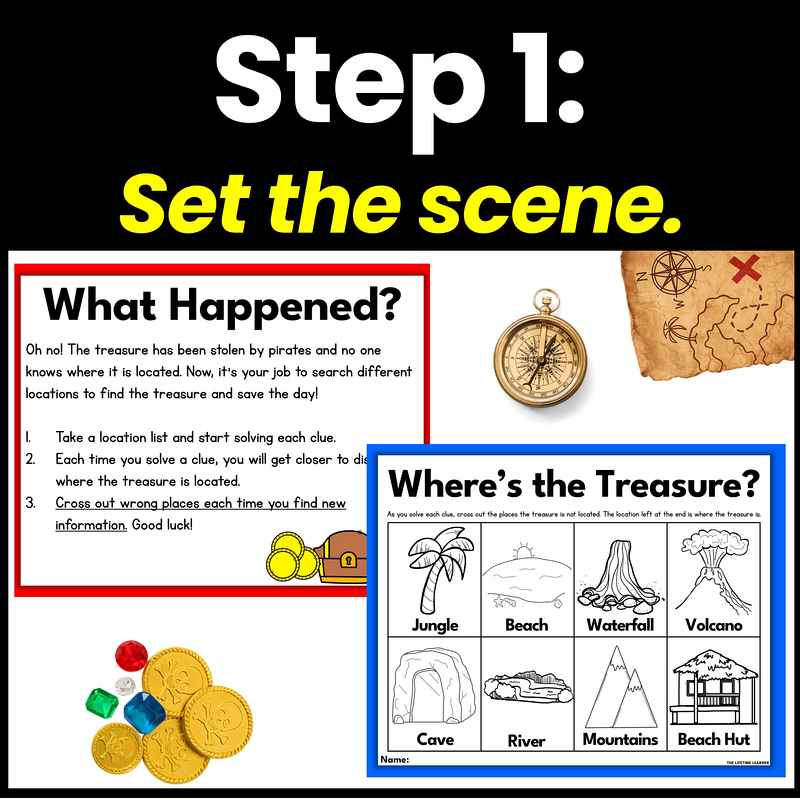
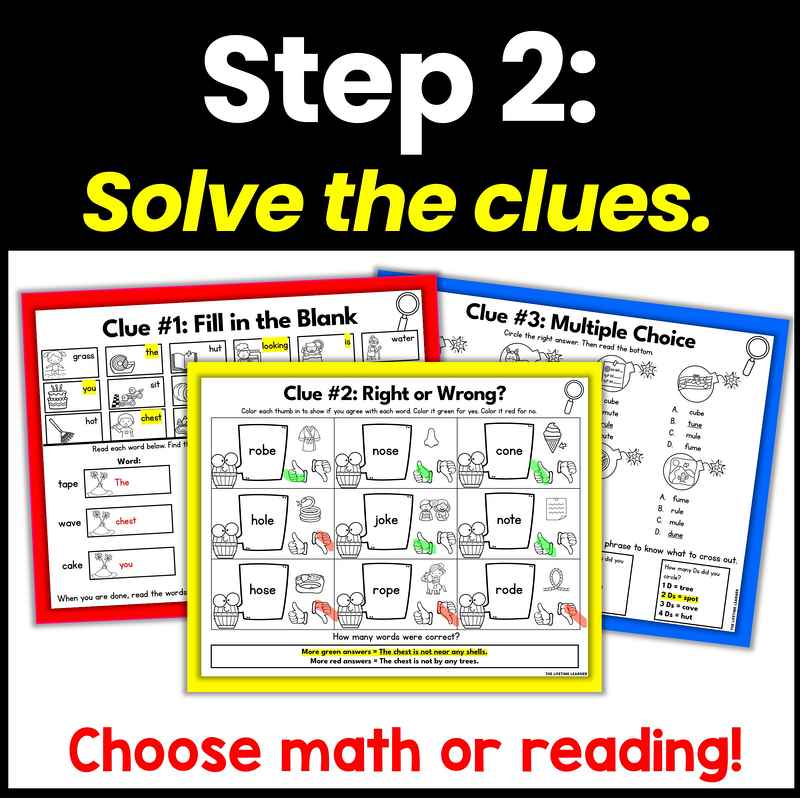
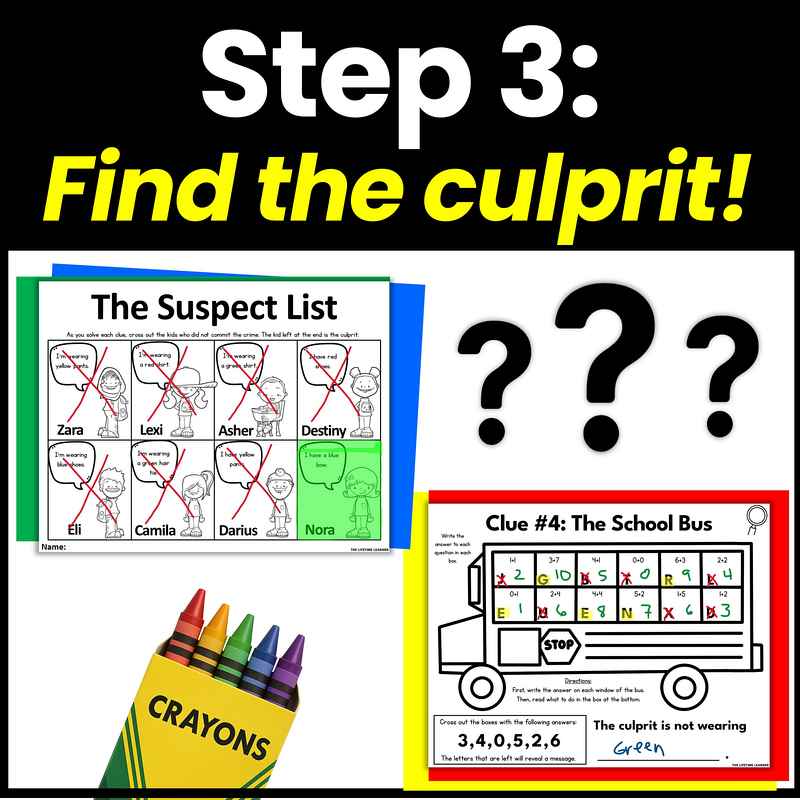
Grammar mysteries are story-based activities where students help solve a simple storyline, like finding a missing item or figuring out who made a silly mistake. The teacher reads the directions and guides the class through each page while students complete short grammar tasks to uncover clues.
Each clue helps narrow down the answer. The focus stays on 2nd and 3rd grade grammar skills, such as parts of speech, sentence structure, capitalization, and punctuation. It turns grammar review into a game the class works through together.
Instead of isolated grammar drills, grammar mysteries let you make learning FUN!
Here’s how they look in a real 2nd or 3rd grade classroom:
Each step feels achievable, and students stay engaged because they’re working toward solving the mystery together (while secretly practicing grammar). It’s a win-win!
At this stage, students are ready to work more independently. With grammar mysteries, they read the prompts, apply grammar skills, and work through each clue on their own, building confidence while still staying engaged in the mystery.
If you’re new to mystery-style learning, the easiest way to understand them is to try one!
This free math and reading activity lets you see the “magic of mysteries” in action — students solve clues, eliminate options, and arrive at one final answer.
And the coolest part? The math and reading versions have different culprits so you can play twice (once in each subject)!
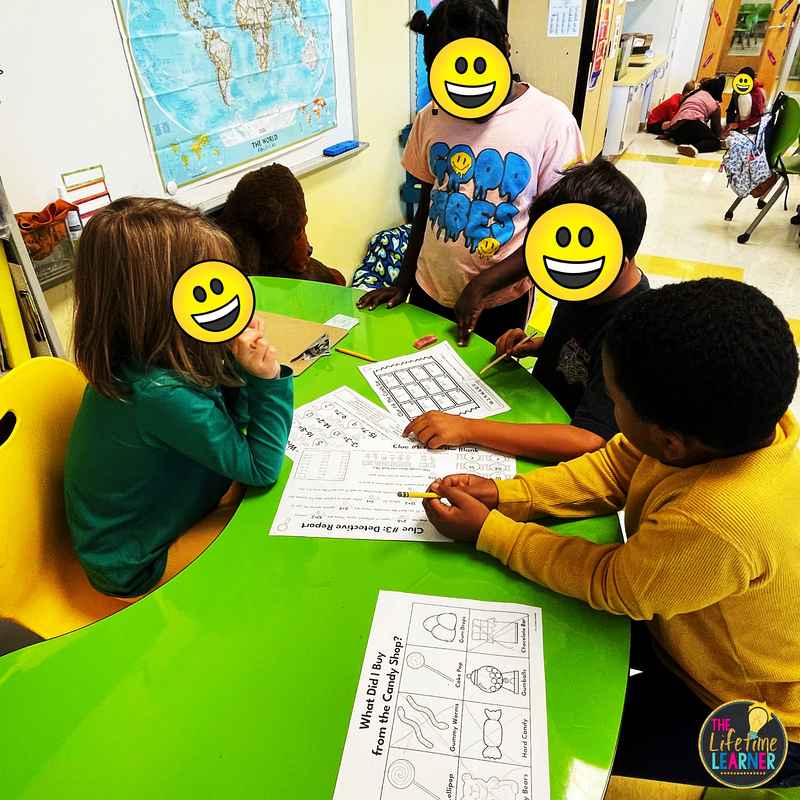
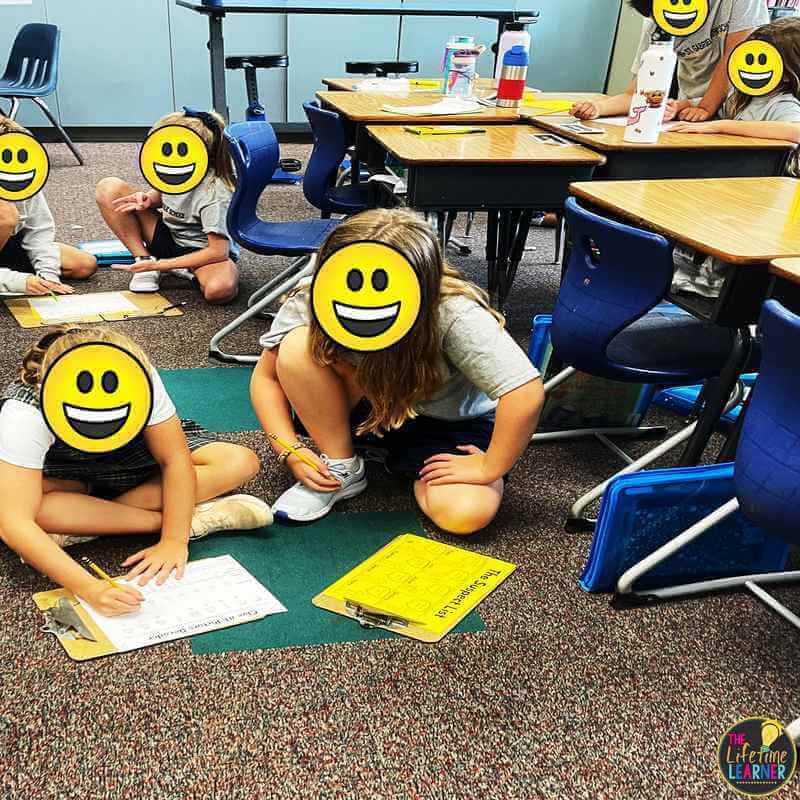
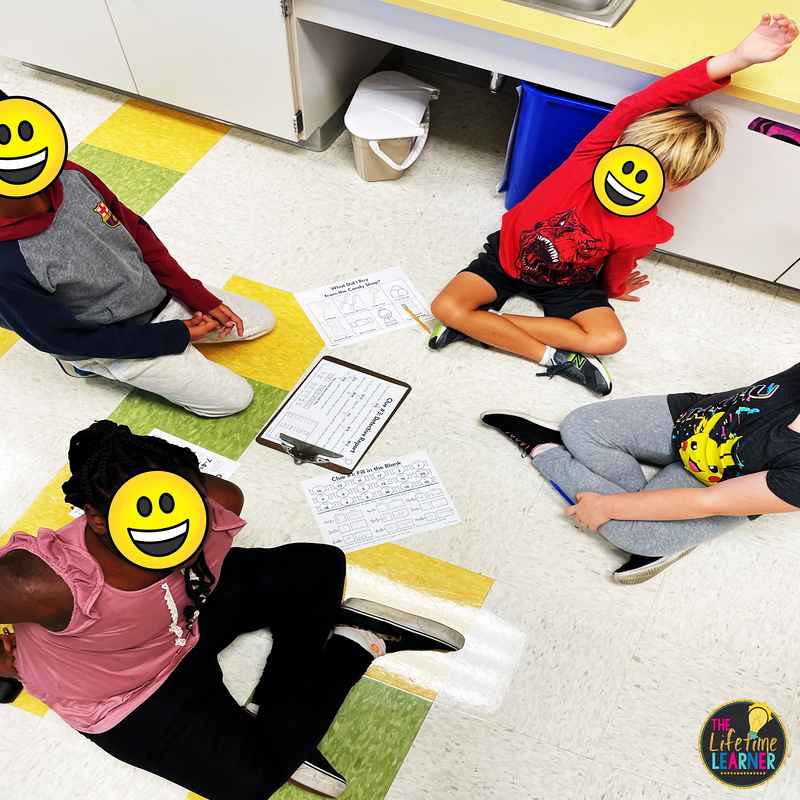
You can use grades 2–3 grammar mysteries in many ways:
• Whole group mini lessons — Solve the mystery together while reviewing a grammar skill.
• Small groups with the teacher — Practice grammar with support and quick feedback.
• Independent work — Students read, apply skills, and solve clues on their own.
• Partner work — Students talk through answers and check their thinking together.
• Center rotations — Add mysteries as a familiar, independent grammar center.
• Spiral review — Revisit skills in a format students already know.
• Digital review — Assign for quiet, independent practice.
• Homework — Meaningful practice that feels like a game.
• Sub plans — Clear directions make these easy to leave.
No matter how you use them, students stay focused because the stories give purpose to every grammar skill.
Each grammar mystery targets 2nd-3rd grade grammar standards. You can choose mysteries that match what you’re teaching or want to spiral review in a way that feels effortless.
The mystery format turns grammar review into a game. Students want to listen carefully, try each task, and help solve the case. Grammar mysteries don’t replace your grammar instruction. They reinforce it in a way that feels playful and manageable for learners in grades 2 and 3.
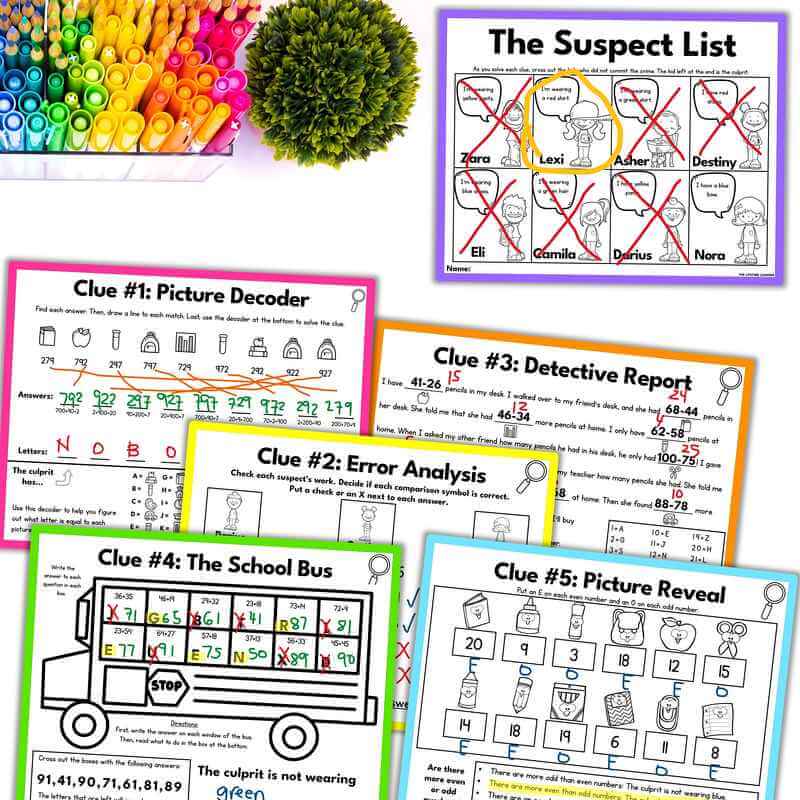


The Lifetime Learner’s grammar mysteries are created to be easy to use with students. The directions are simple, the tasks are short, and the teacher can lead every step of the process.
Each mystery turns grammar practice a shared problem-solving experience. The consistent format builds confidence, while the fun themes keep second and third graders engaged.
• Print-and-go mystery worksheets
• Digital version in Google Slides
• 3-clue version and 5-clue version for easy differentiation
• Recording sheet for students to track clues
• Clear teacher directions
• Certificate of completion
• Fast finisher directed drawing activity
Literacy mysteries help with:
Teachers often use these when attention spans are short or when review needs to feel exciting. Students stay involved because they want to help solve the mystery.
Are you ready to try a grammar mystery in your second and third grade classroom, but feeling stuck when it comes to finding the right theme or language standard? To make it easy, I’ve put together 30 themed grammar mysteries where each is aligned to a specific grammar skills.
Use the list below to jump to the type of grammar practice you’re looking for, or scroll through to see all of the themes included.
Punctuation and Capitalization
Jump to Frequently Asked Questions

Goal: Students solve clues to figure out whose order is missing from the table at the restaurant.
Click here for more information about the restaurant grammar mystery on TPT.
Or grab it right here directly on the website.

Goal: Students solve clues to discover who won the big race.
Click here for more information about the race car grammar mystery on TPT.
Or grab it right here directly on the website.
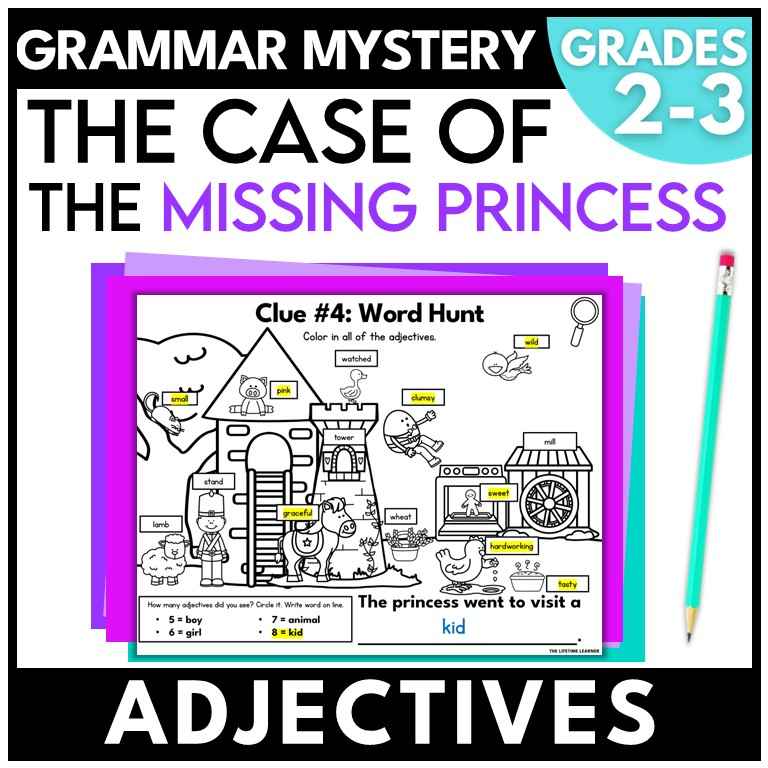
Goal: Students solve clues to figure out which fairy tale character’s house the missing princess is hiding at.
Click here for more information about the fairy tale grammar mystery on TPT.
Or grab it right here directly on the website.

Goal: Students head into outer space to find the planet the missing astronaut went to explore.
Click here for more information about the outer space grammar mystery on TPT.
Or grab it right here directly on the website.
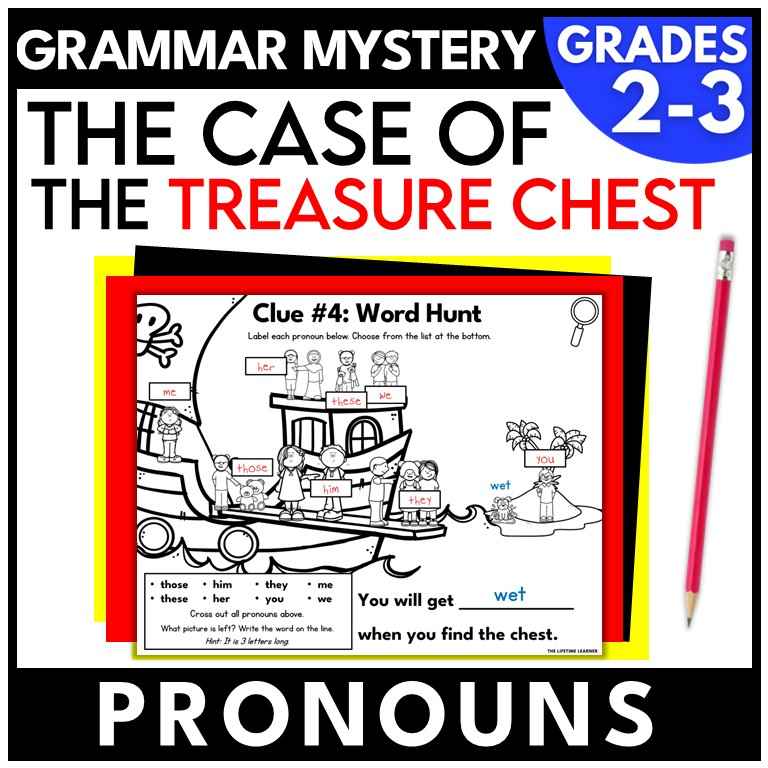
Goal: Students try to figure out where the treasure chest was hidden.
Click here for more information about the pirate grammar mystery on TPT.
Or grab it right here directly on the website.

Goal: Students figure out which instrument went missing at the rock concert.
Click here for more information about the rock star grammar mystery on TPT.
Or grab it right here directly on the website.

Goal: Students embark on a journey of which magical creature took the magic wand.
Click here for more information about the magic grammar mystery on TPT.
Or grab it right here directly on the website.

Goal: Students complete a case to decipher which donut went missing at the bakery.
Click here for more information about the donut grammar mystery on TPT.
Or grab it right here directly on the website.

Goal: Students figure out which pet their parents got for them as a surprise.
Click here for more information about the pet grammar mystery on TPT.
Or grab it right here directly on the website.
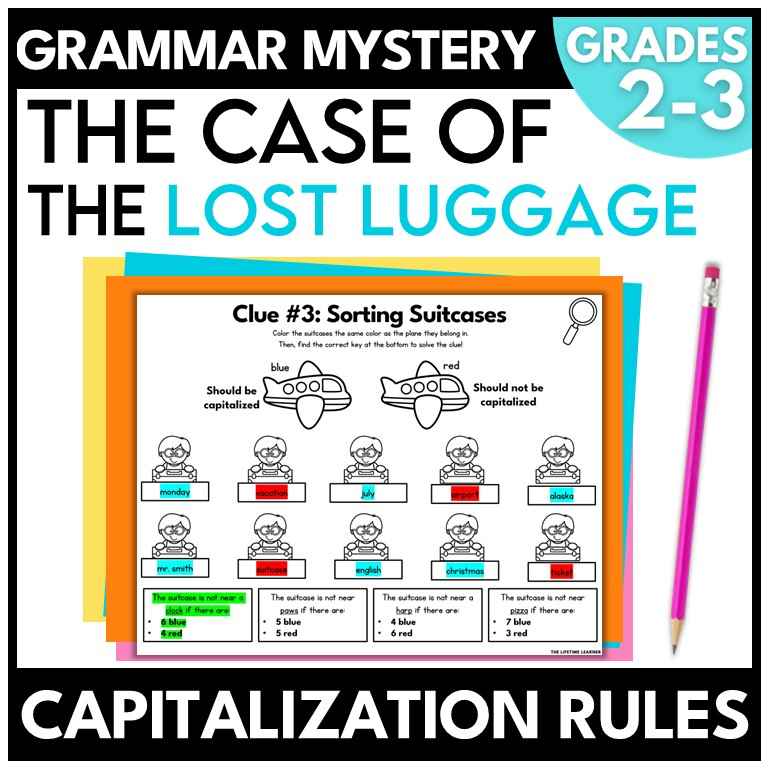
Goal: Students attempt to figure out where they left their missing suitcase around the world.
Click here for more information about the travel grammar mystery on TPT.
Or grab it right here directly on the website.

Goal: Students embark on a journey to crack the case of where the mailman is around the town.
Click here for more information about the mailman grammar mystery on TPT.
Or grab it right here directly on the website.

Goal: Students solve clues to figure out where your friend is at summer camp.
Click here for more information about the camping grammar mystery on TPT.
Or grab it right here directly on the website.

Goal: Students figure out which creature the scuba diver saw while he was under the sea.
Click here for more information about the ocean grammar mystery on TPT.
Or grab it right here directly on the website.

Goal: Students complete clues to find out what animal the safari jeep stumbled upon in the African savannah.
Click here for more information about the safari grammar mystery on TPT.
Or grab it right here directly on the website.

Goal: Students crack the case of which dinosaur stole the dinosaur egg from the nest.
Click here for more information about the dinosaur grammar mystery on TPT.
Or grab it right here directly on the website.

Goal: Students discover where the video game final boss is hiding in the video game world.
Click here for more information about the video game grammar mystery on TPT.
Or grab it right here directly on the website.

Goal: Students solve clues to discover what is inside the mystery box.
Click here for more information about the box grammar mystery on TPT.
Or grab it right here directly on the website.
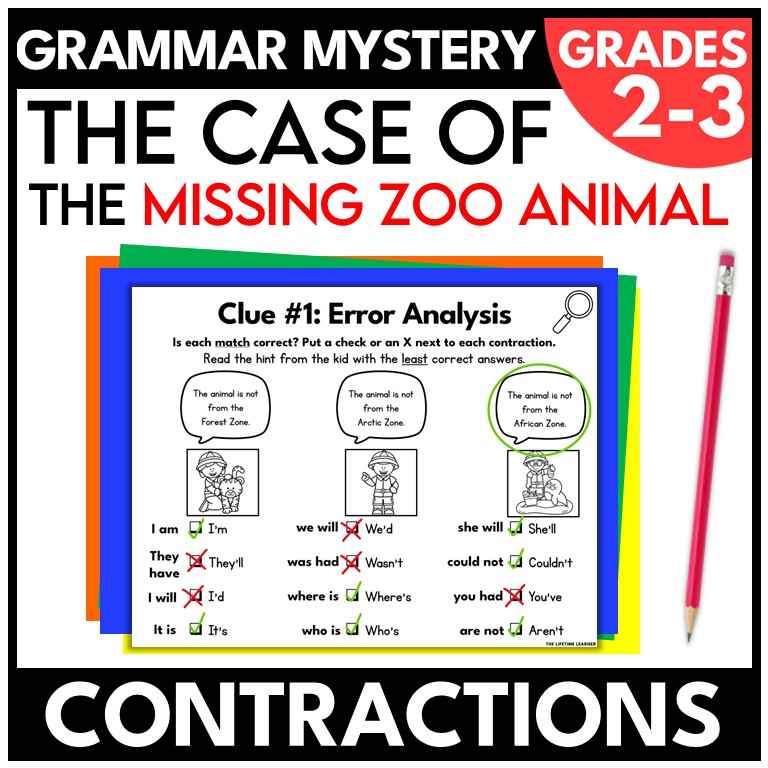
Goal: Students become detectives who are tracking down the zoo animal who got out at the zoo!
Click here for more information about the zoo grammar mystery on TPT.
Or grab it right here directly on the website.

Goal: Students figure out where the cotton candy is hidden in this whodunnit.
Click here for more information about the theme park grammar mystery on TPT.
Or grab it right here directly on the website.

Goal: Students figure out where around the school the missing trophy is hidden.
Click here for more information about the sports grammar mystery on TPT.
Or grab it right here directly on the website.

Goal: Students solve clues to figure out which student took the missing pencil.
Click here for more information about the back to school grammar mystery on TPT.
Or grab it right here directly on the website.

Goal: Students figure out which Halloween character took the candy at the party.
Click here for more information about the Halloween grammar mystery on TPT.
Or grab it right here directly on the website.
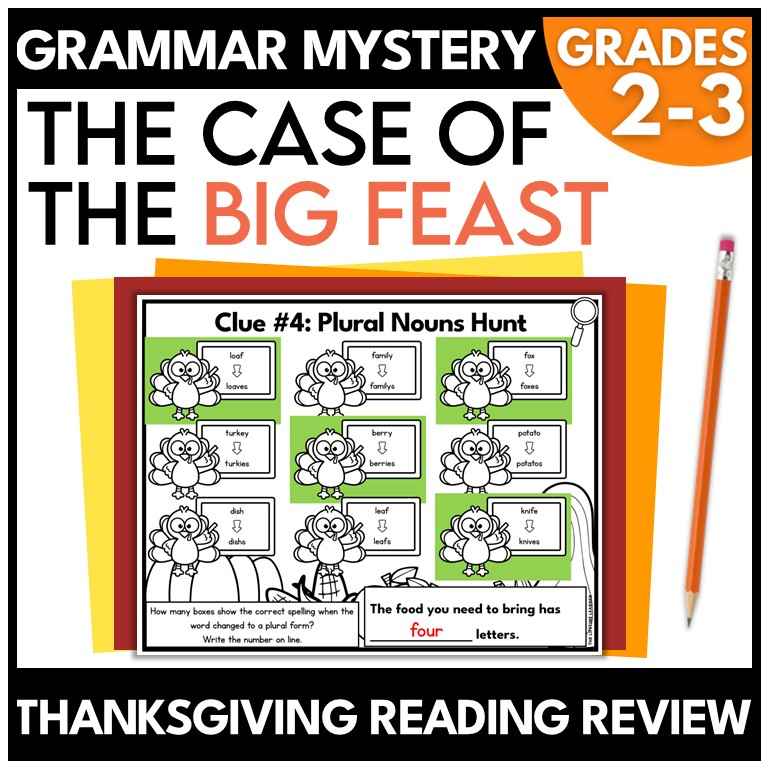
Goal: Students solve clues to figure out which dish they need to bring to Thanksgiving dinner.
Click here for more information about the Thanksgiving grammar mystery on TPT.
Or grab it right here directly on the website.

Goal: Students crack a case where they need to find out where Santa is at the North Pole.
Click here for more information about the Christmas grammar mystery on TPT.
Or grab it right here directly on the website.
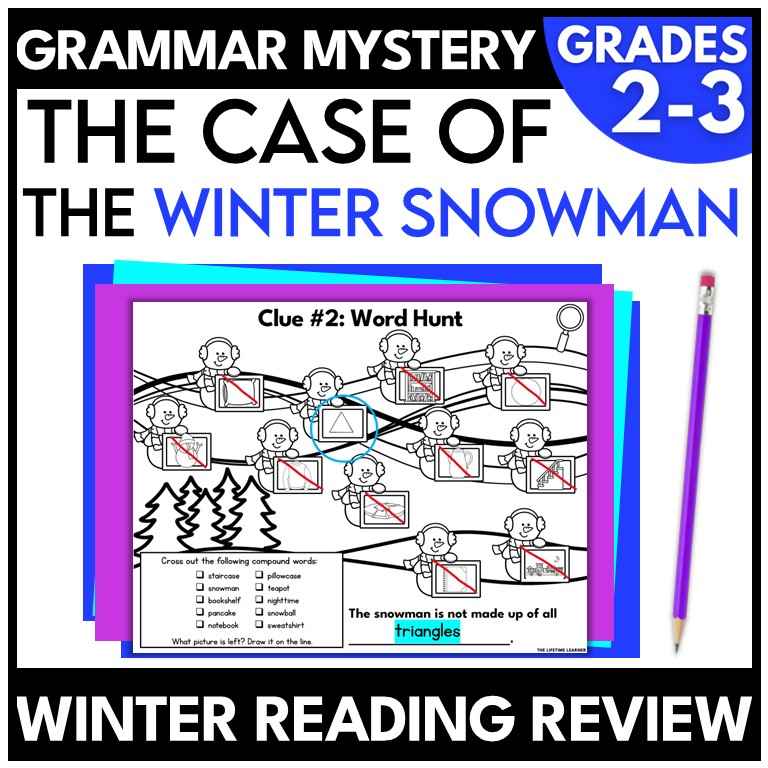
Goal: Students decipher clues to find out which snowman belongs to them!
Click here for more information about the winter grammar mystery on TPT.
Or grab it right here directly on the website.
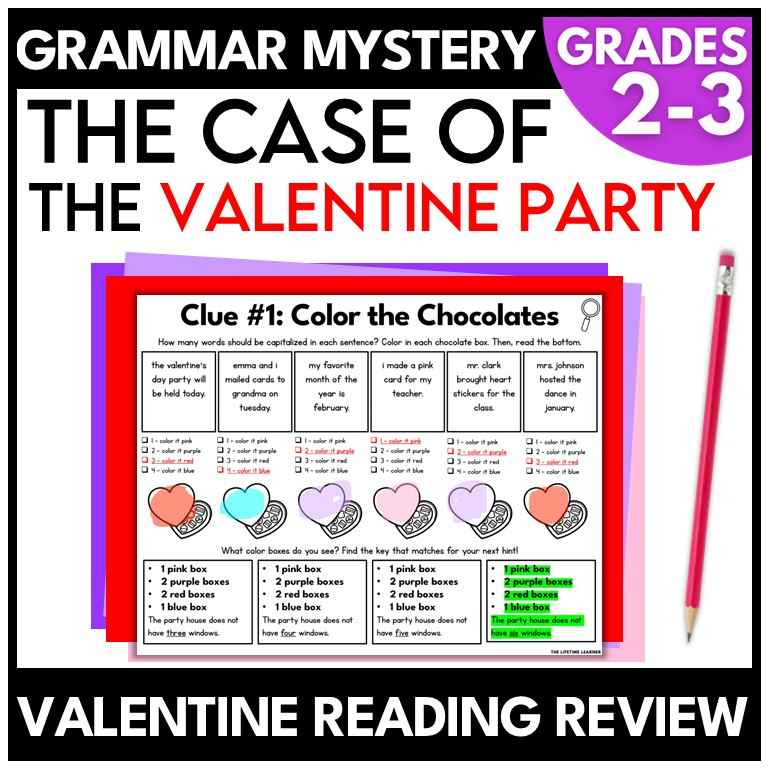
Goal: Students solve a case to find out which house the Valentine’s Day party is being held at.
Click here for more information about the Valentine grammar mystery on TPT.
Or grab it right here directly on the website.
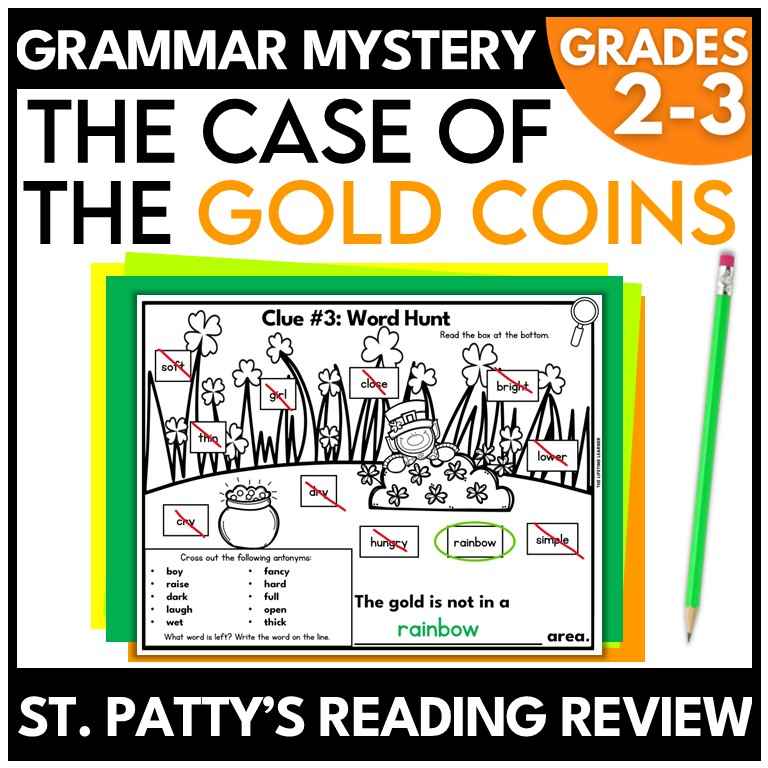
Goal: Students become detectives to find where the leprechaun is hiding in the leprechaun village.
Click here for more information about the Saint Patrick’s Day grammar mystery on TPT.
Or grab it right here directly on the website.

Goal: Students solve clues to figure out where the Easter bunny is hiding on the map.
Click here for more information about the Easter grammar mystery on TPT.
Or grab it right here directly on the website.

Goal: Students complete clues that get them closer to figuring out what food the deer keeps eating out of the garden.
Click here for more information about the spring grammar mystery on TPT.
Or grab it right here directly on the website.

Goal: Students work through clues to uncover which kid at the beach took the missing sunglasses.
Click here for more information about the summer grammar mystery on TPT.
Or grab it right here directly on the website.
Both! There are 2 versions so you can use the version that works best with your class. Or, you could differentiate and use the 3 clue version with some students and the 5 clue version with other groups. Both versions lead to the same conclusion/culprit, ensuring that students will not be aware of the different leveled assignments.
You can use this whole group, small group, in partners, table groups, independently, as homework, and more! Students in K-1 will need support reading the directions the first few times they complete these mysteries. I’d suggest completing them with teacher support in whole group or small groups for K-1. For grades 2-5, partners, table groups, and independent practice is appropriate. As students become more comfortable, working in pairs and independently will become more feasible.
No—phonics and grammar mysteries are completely different! They use their own set of clues, target grammar or phonics skills, and end with a unique conclusion. The only shared piece is the starting list of suspects, but each mystery reveals a different culprit. Check out the preview to see the differences in detail. You can absolutely purchase both and enjoy solving the mystery twice!
Yes! The digital version is available in Google Slides and the link is included in the printable PDF. You can download the Google Slides to use in PowerPoint if needed as well.
A fast finisher directed drawing activity is included for students who finish early! There is also a certificate of completion for every student. You could also have students work on incomplete assignments or read a book.

Looking for an easy way to increase student engagement? You’re in the right place! On the blog, you’ll discover practical tips for how to use mysteries in your classroom and the top mystery themes for K-5.
Find information on what you need:
Browse Mysteries on the Website Shop:
Join in on social media! Follow along to see more on Instagram, Facebook, Facebook Group, or TikTok.

