

Imagine this…
It’s the week before a holiday. The schedule is off. Attention spans are short. Energy is high and focus is off in all the wrong ways. You want something that feels fun, but still counts as real learning. Something structured enough to calm the room, but interesting enough that students feel motivated.
That’s where seasonal mysteries come in!
Seasonal mysteries give students a clear goal, a reason to focus, and just enough intrigue to pull them in. They work across math and reading, across grade levels, and when high engagement is needed.
Below are 10 seasonal mysteries students genuinely love, and practical ways teachers use each one in real classrooms.

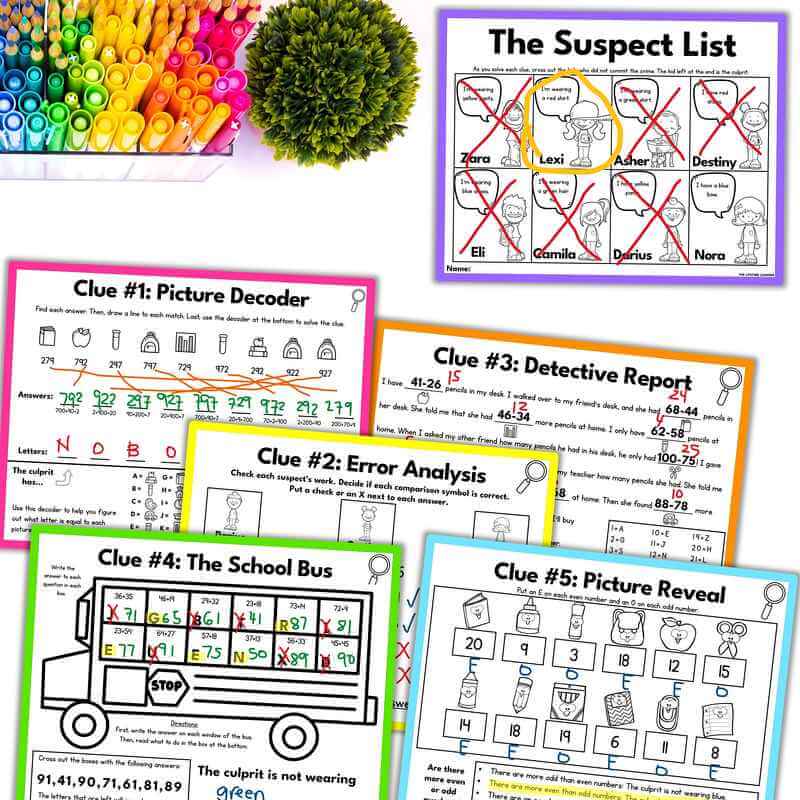

Premise: Which student on the suspect list took the missing pencil?
This one works especially well early in the year when routines are still forming. Students are focused on one simple question: who is the thief?
For kindergarten and first grade, this works beautifully as a whole group mystery. You read clues together, model how to eliminate suspects, and build stamina for listening and thinking as a class. You can do the whole thing together with the digital version, or put the printable version under the document camera as you go through the clues (calling on students who raise their hands to answer questions).
In upper grades, teachers often use the math version as a partner activity. It sets expectations early without feeling heavy or boring. And, you get to practice working on communication and collaboration skills. Win-win!
Why it works:

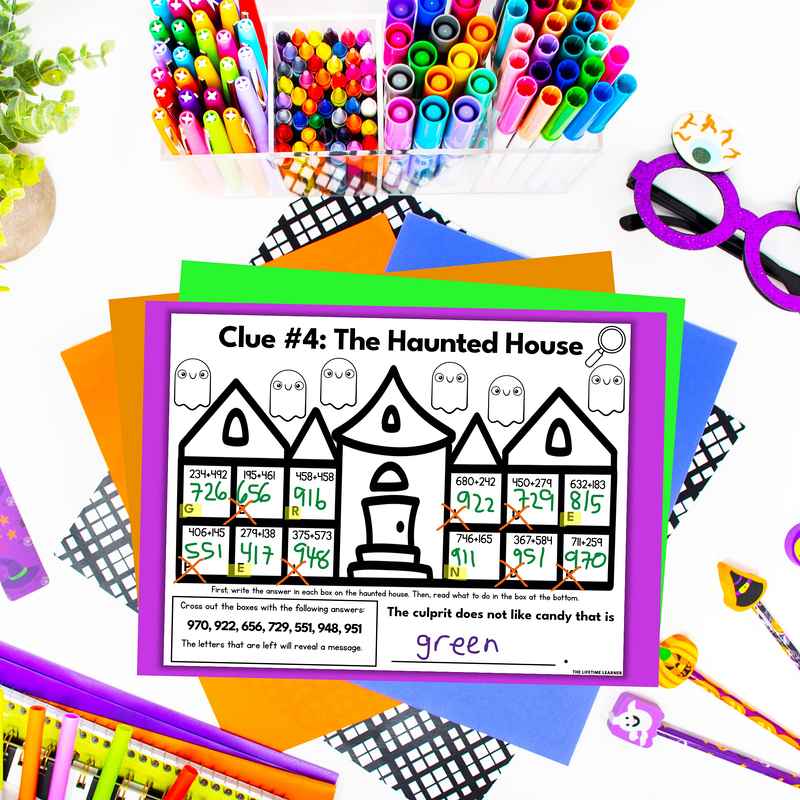
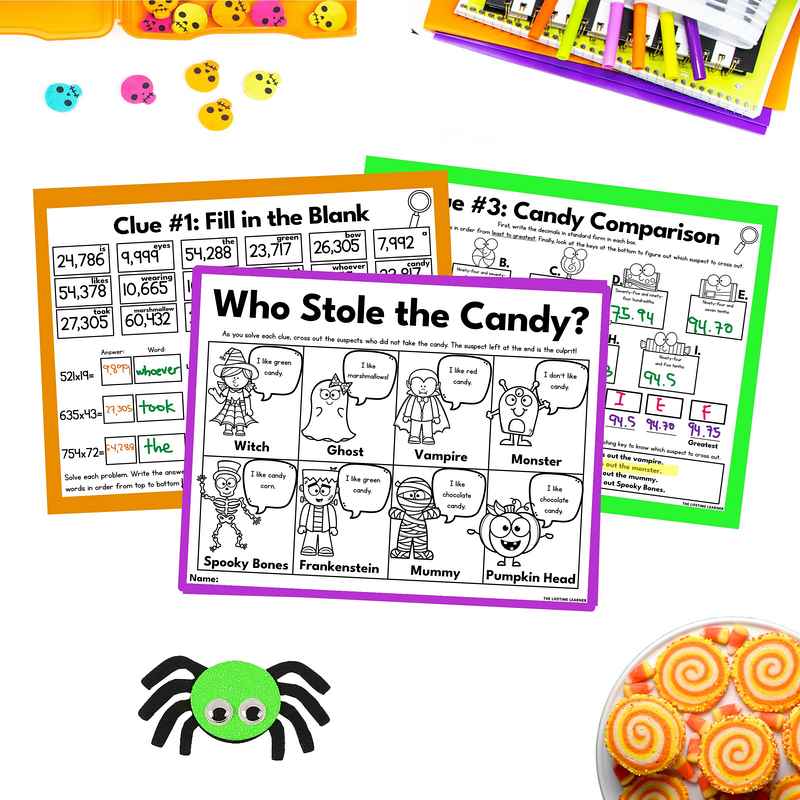
Premise: Which monster stole the Halloween candy at the haunted house?
The week of Halloween can be chaotic. This mystery gives that energy somewhere to go! Instead of racing through worksheets, students slow down because they want the answer
Many teachers like revealing one clue per day leading up to Halloween during their mini-lesson time. These can be a perfect spiral review activity. It turns review into something students anticipate even when Halloween is center of mind.


Premise: Which dish should you bring to the big Thanksgiving feast?
This mystery has a calmer tone, which fits November perfectly. Students are figuring out which dish belongs at Thanksgiving dinner based on the answers to each clue. Every
This seasonal mystery works well as independent practice or table groups in grades 2–5. In K-1, completing this in the few days before Thanksgiving break at your small group can be a nice way to remediate skills you’ve taught earlier in the year. Choose between the 3 and 5 clue version depending on the time frame you need to fill.


Premise: Where is Santa at the North Pole?
Attention spans in December can be unpredictable. This seasonal mystery works because it gives students the motivation they need to complete their assignment (while also squeezing in some spiral review).
Many teachers use a math or reading seasonal mystery as a multi-day activity:
It feels festive, but it still has an academic focus. That balance matters in December. Digital versions are popular too when using seasonal mysteries, especially for upper grades, since they cut down on paper.
If you’re new to mystery-style learning, the easiest way to understand them is to try one!
This free math and reading activity lets you see the “magic of mysteries” in action — students solve clues, eliminate options, and arrive at one final answer.
And the coolest part? The math and reading versions have different culprits so you can play twice (once in each subject)!


Premise: Which snowman did you build during the winter blizzard?
This mystery is great for re-engaging students after winter break when establishing norms need a reset and some review may be needed while easing back into routines.
For K–2, teachers often use this in small groups. They may use the winter phonics review for their higher students and the CVC version for their lower level students. Or, they can opt to use the 3 clue vs 5 clue version for more or less practice. Students talk through clues together and practice reasoning out loud.
This seasonal mystery also works well as independent enrichment. The structure is familiar, but the theme feels new again. If you have fast finishers, you can hand this out and keep them working on something fun while the rest of your class finishes up the main assignment.
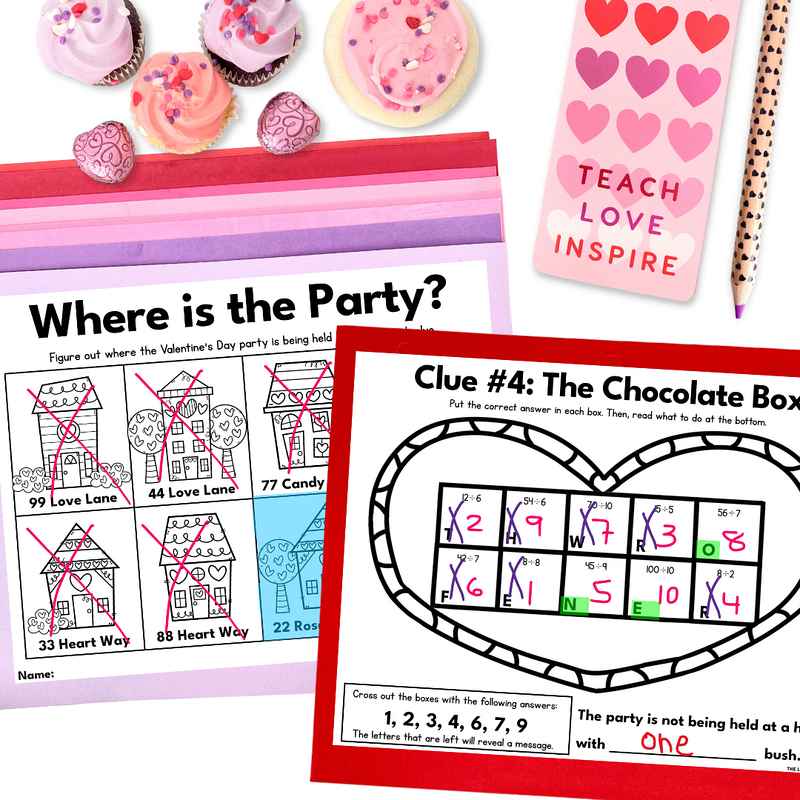

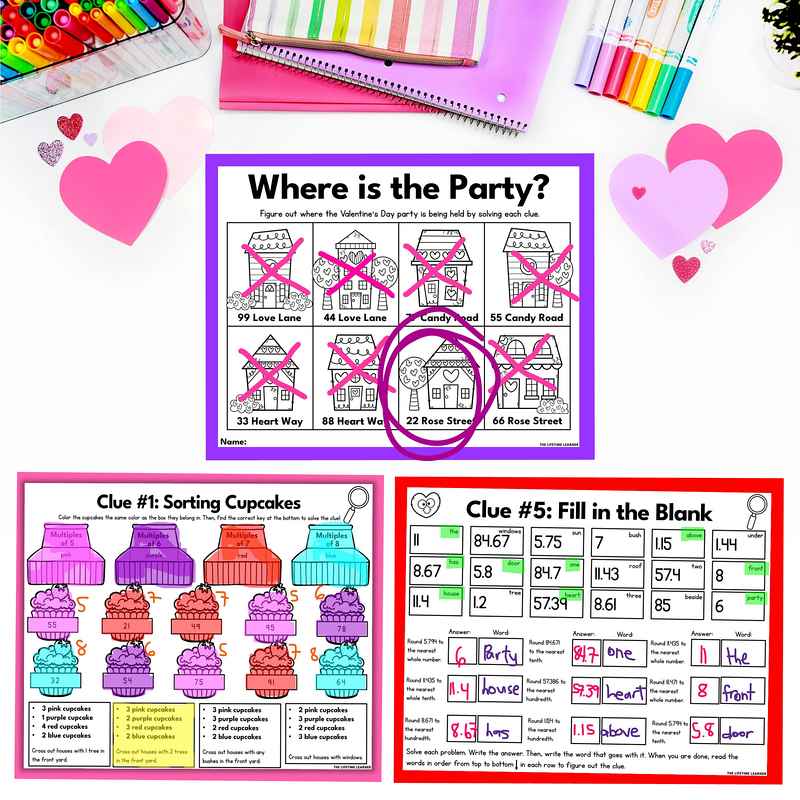
Premise: Where is the Valentine’s Day party being held in the neighborhood?
Partners work can work really well on Valentine’s Day. Students talk through clues together and stay focused longer than they usually would while eating all the candy.
And mysteries are always a nice break from the regular routine. Did you know the math and reading versions are totally different from one another? They use the same suspect/location list, but lead to different outcomes. This means you could have students complete the math activity in the morning in table groups and the phonics mystery in the afternoon during centers. The clues are different, the content is different, and the culprit is different too! But, the format is the same so you only have to explain directions once.


Premise: Where is the leprechaun hiding in the St. Patrick’s Day village?
Teachers often set this up as a room transformation. Add a few green tablecloths to your desks, grab a pack of chocolate coins for a prize at the end, and you’re ready to begin! You simply print out the mystery (or assign it digitally) and can use this for small groups, whole group, partners, table groups, and more.
It feels silly and fun to kids.
But the seasonal mystery is sneakily reviewing skills.
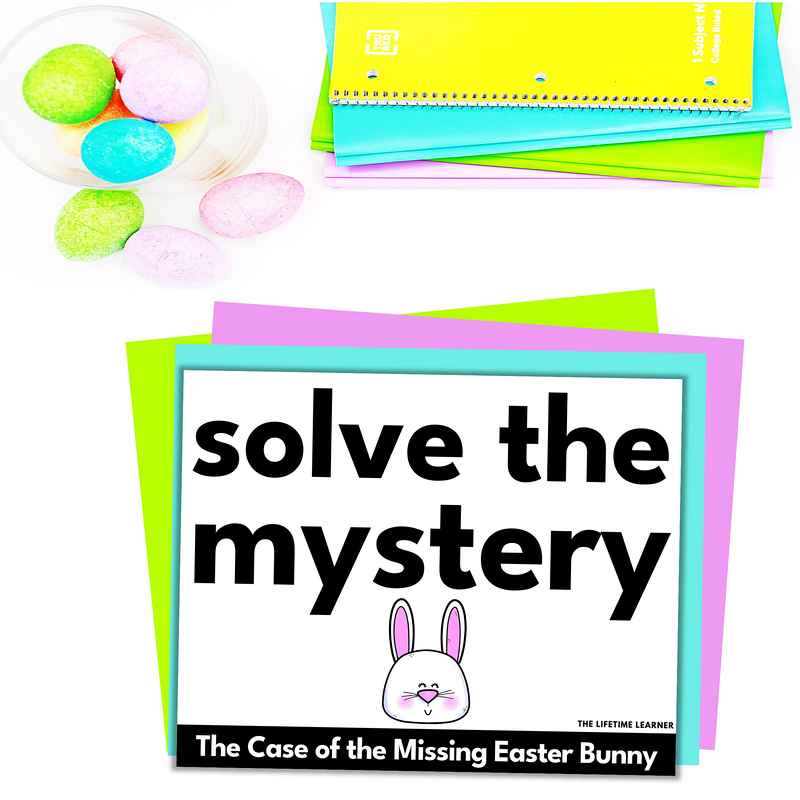
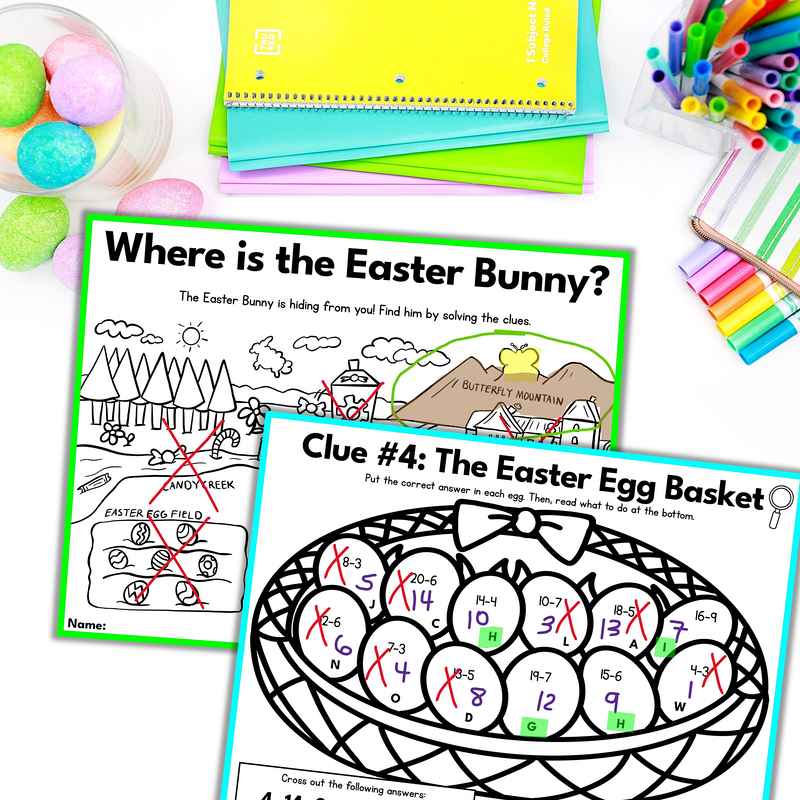
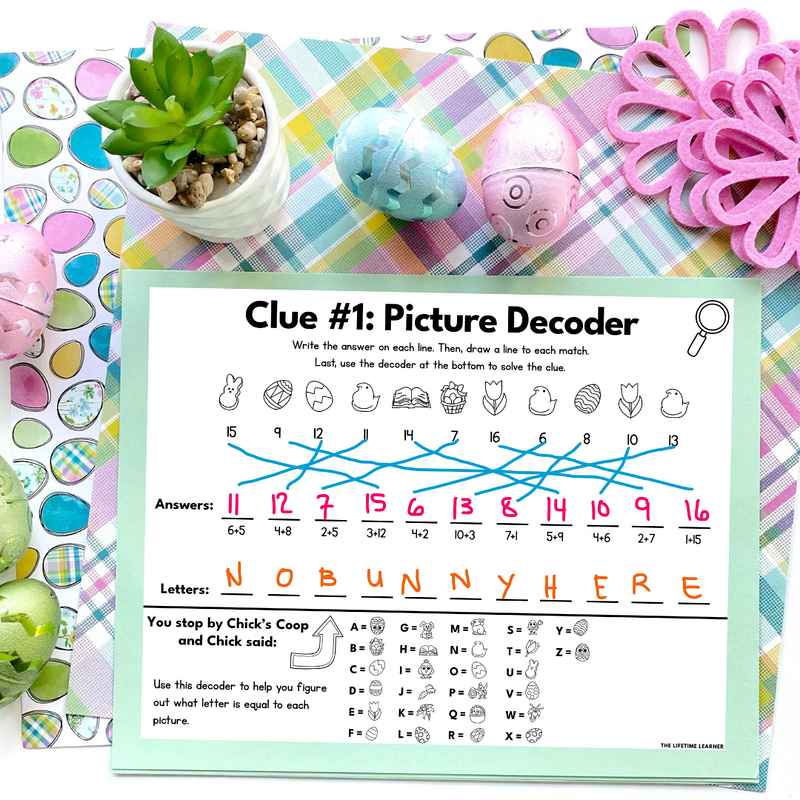
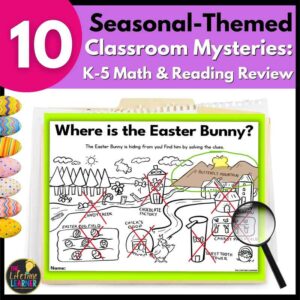
Premise: Where is the Easter Bunny in the town?
Spring schedules are unpredictable. Testing. Assemblies. Weather changes. This mystery works well as a stand-alone lesson you can pull out when plans change last minute because everyone needs a solid review in the springtime.
Many teachers save this one specifically for sub plans because:


Premise: What did the deer eat out of the garden?
When test prep season is upon us, review is top of mind. This spring mystery (depending on the subject) reviews many skills so you can easily see what skills are strong and what skills you’ll need to reteach before end of year testing arrives.
You can assign it individually to see how students do on their own, or assign it as homework so it’s not ‘just another worksheet’ they need to complete.


Premise: Which kid at the beach took the missing sunglasses?
Students are already thinking about summer. This mystery leans into that without losing structure. Whole group lessons work well here for K–2. Upper grades often enjoy this as a partner or table group activity when the year is winding down in those last few weeks. A lot of teachers also use it during an A-Z countdown.
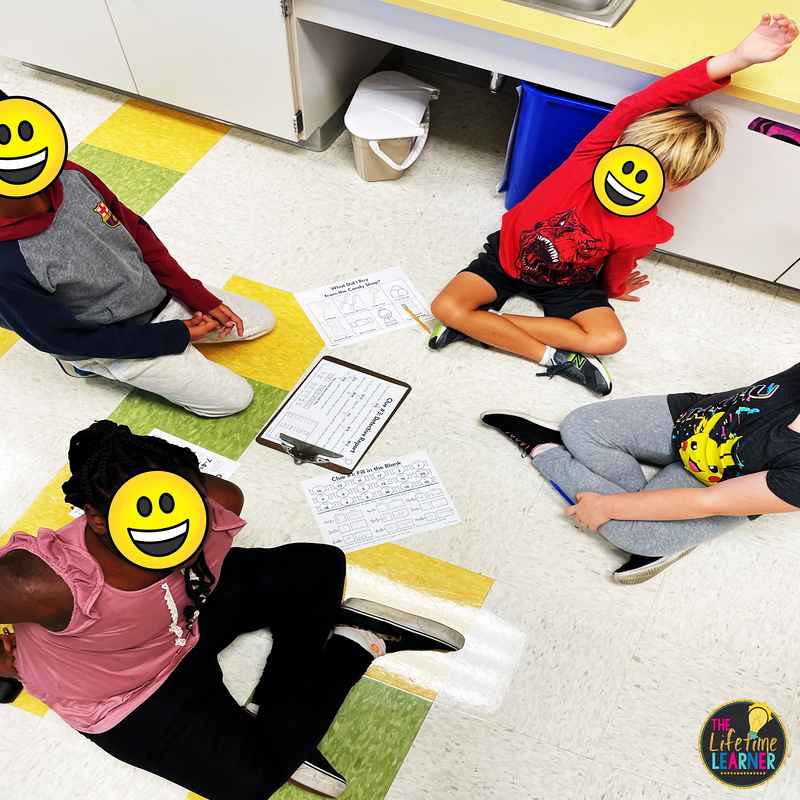
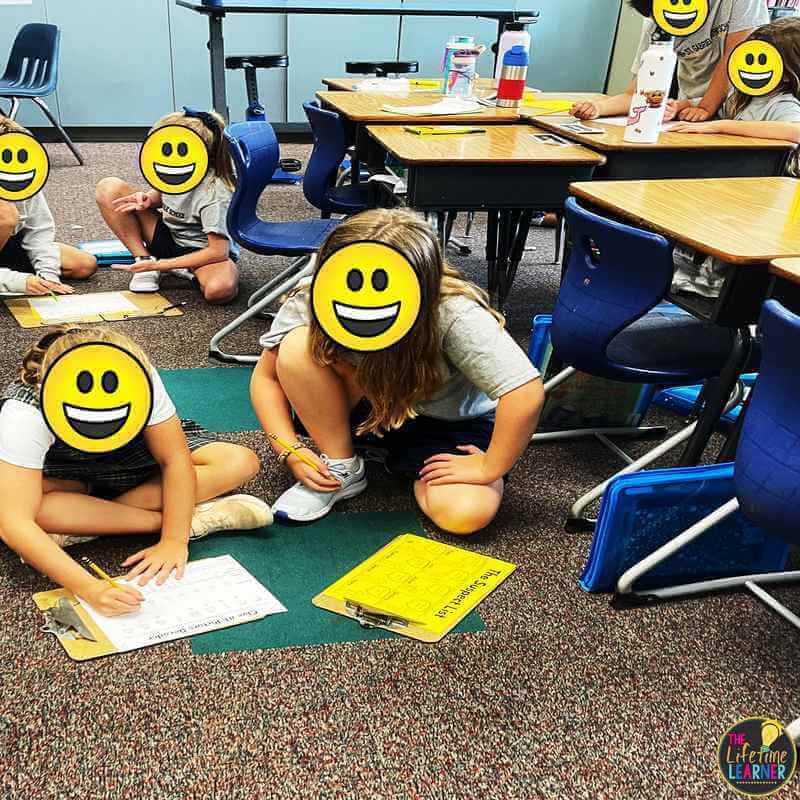
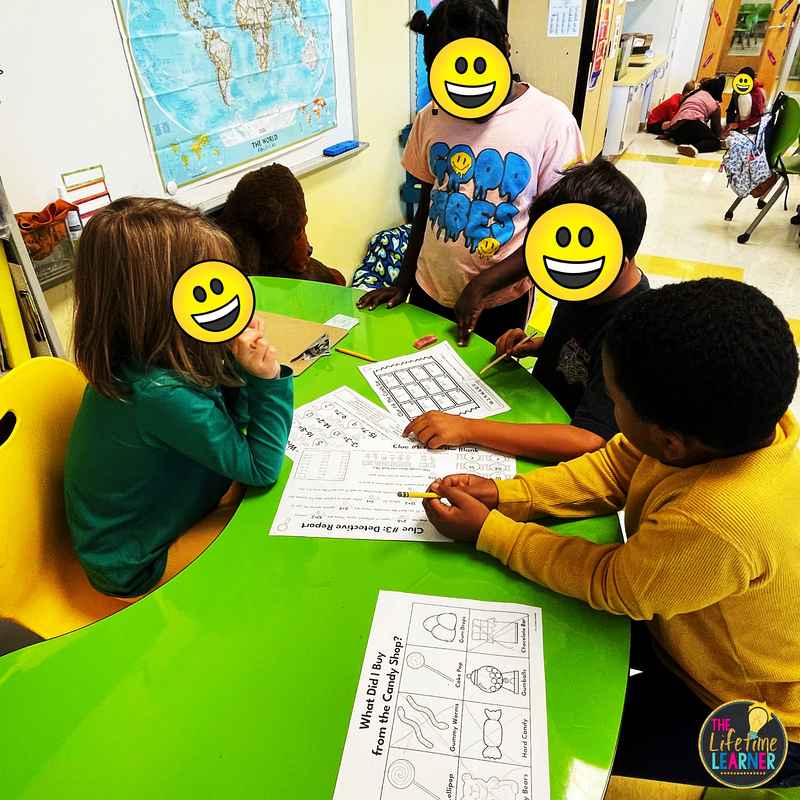
Every mystery has options for:
That flexibility is what makes seasonal mysteries so useful since you can use them so many ways. Stretch them across a whole week or finish them in one class period. Pull them out when you have a sub or when you’re wanting an easy classroom transformation.
You’re never locked into one way of using them. Versatility is key with these.
You don’t need to use all ten seasonal mysteries to see how well they work. Start with the season you’re in right now, choose the version that fits your class best, and try it once. Most teachers are surprised by how focused their students stay (and how easy it is to reuse the format again later in the year).

Looking for an easy way to increase student engagement? You’re in the right place! On the blog, you’ll discover practical tips for how to use mysteries in your classroom and the top mystery themes for K-5.
Find information on what you need:
Browse Mysteries on the Website Shop:
Join in on social media! Follow along to see more on Instagram, Facebook, Facebook Group, or TikTok.