

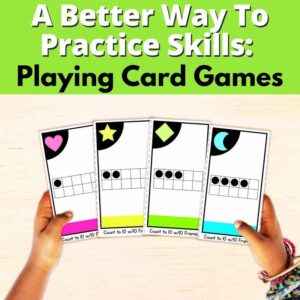
Playing cards are one of those classroom tools that feel instantly familiar. The moment students see a deck, they already understand the basics: take turns, follow the rules, stay engaged. That’s exactly why playing card games for students work so well in elementary classrooms.
The structure stays simple.
The practice stays focused.
And the games work just as well for math, reading, vocabulary, or grammar.
Below you’ll find an overview of how these decks work, a quick spot to try a free game, and then all 10 playing card games for students explained in a clear, classroom-friendly way.
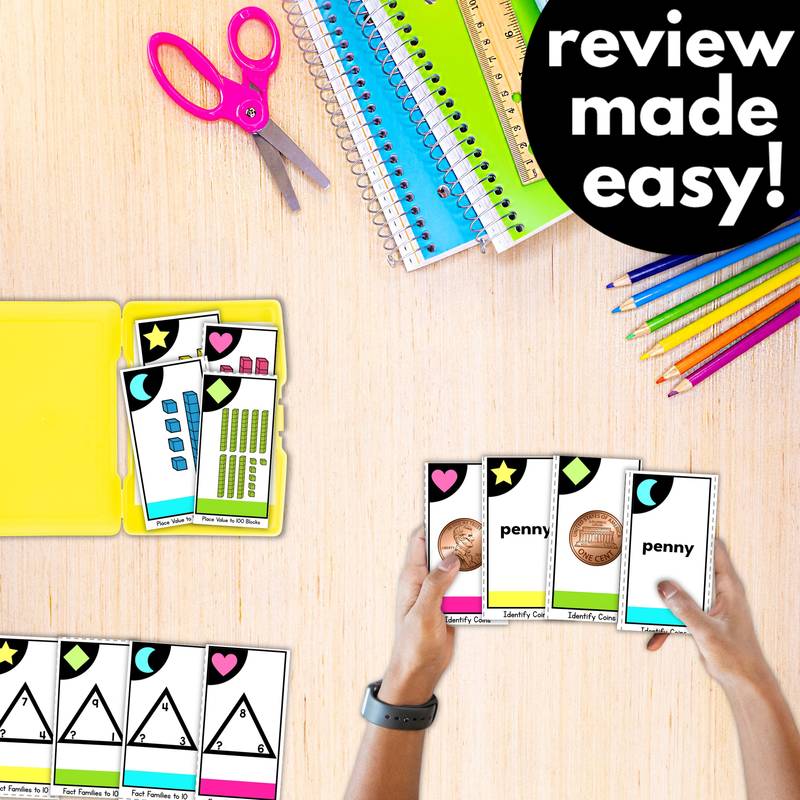
Each deck is built around the same idea: familiar card games paired with academic content. Every card includes questions, prompts, or tasks that students must respond to as they play. Instead of just matching numbers or suits, students are solving, reading, or thinking before making a move.
Teachers usually model one game once. After that, students can reuse the same deck with multiple game styles. That consistency is what makes playing card games for students so easy to manage.
These decks are commonly used:
The directions stay the same. Only the learning focus changes!
If you want to see how playing card games for students work before committing, starting with a free deck is the easiest way to do it! A free set lets students learn the routine and gives you a feel for how the games fit into your classroom flow.
And even cooler? This freebie comes with 5 hands-on games to try!
Each game below uses the same deck of cards, but the way students use them changes. That means you can keep the materials the same while switching up how the practice feels, without having to reteach directions or add extra steps.
Students ask each other for specific answers instead of numbers. To make a match, they must correctly solve or read what’s on the card. This game encourages listening, recall, and clear communication.
Students look for pairs with matching answers. They solve cards, compare, and keep pairs they can justify. This works well when you want students to slow down and double-check their thinking.
Each player flips a card and solves it. The player with the correct or highest answer wins the round. War adds excitement while keeping the rules straightforward.
Students form pairs as they solve and match cards, working carefully to avoid being stuck with the final unmatched card. This game encourages attention and accuracy.
Cards are flipped quickly, and students watch closely for matching answers. When a match appears, the first student to notice calls it out. Snap is fast-paced and great for quick practice.
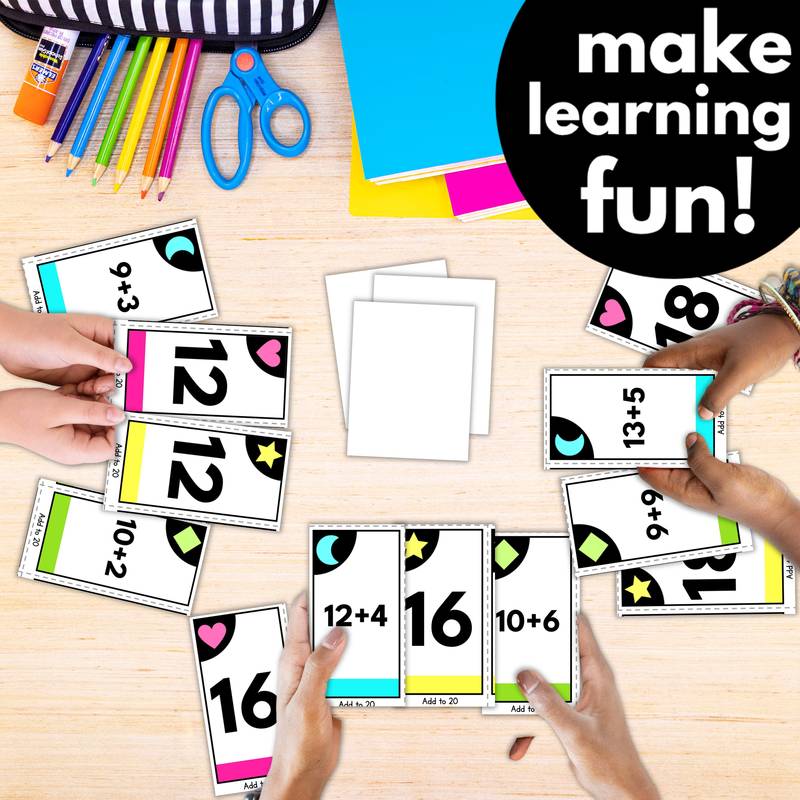
Students work to collect four cards with matching answers. This game encourages repeated exposure to the same type of thinking while keeping students motivated to keep playing.
Cards are flipped into a pile. When a specific answer or target appears, students react quickly. This game works best when you want energy and focus at the same time.
Cards are placed face down. Students take turns flipping two cards, trying to find matching answers. Memory Match builds concentration and encourages students to remember patterns.
Students earn cards by solving them correctly and physically stack them into a tower. The visual element keeps students invested and adds a fun challenge.
Students solve cards while watching for matches. When a match appears, students race to grab a spoon. This game adds excitement while still requiring careful thinking.
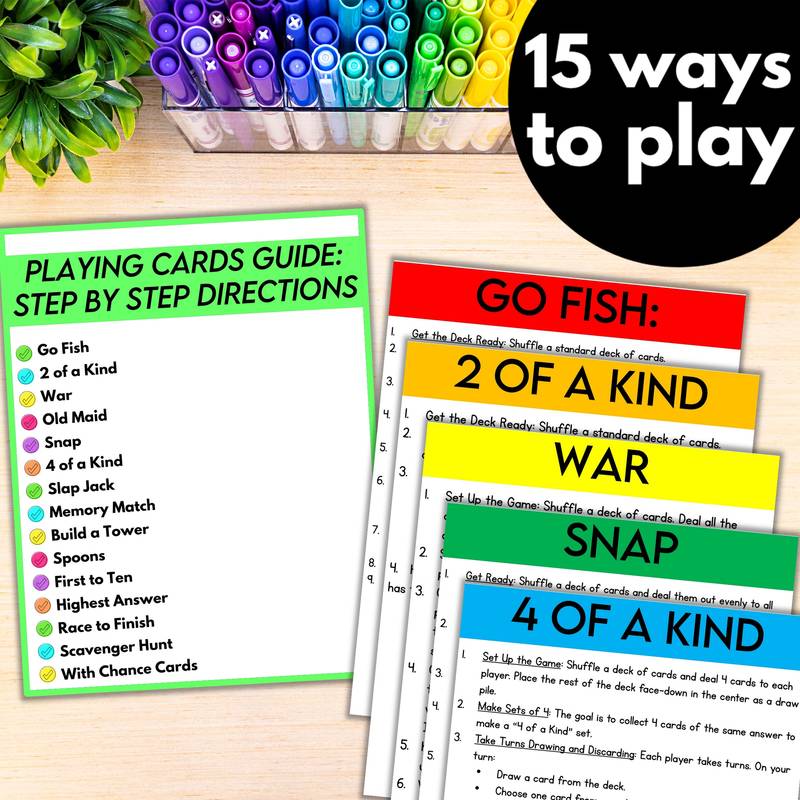
Students collect cards and keep a running total. The first student to reach the target wins. This game works well for cumulative thinking and strategy.
Students flip and solve cards, then compare answers. The highest correct answer wins the round. This format naturally leads students to justify their reasoning.
Students work quickly through their deck, solving and placing cards as they go. The focus is on accuracy while maintaining a steady pace.
Cards are placed around the room. Students move, search, solve, and collect matches. This game adds movement while keeping learning purposeful.
Chance cards are mixed into any game to change direction, skip turns, or add surprises. These cards keep gameplay unpredictable and fun without disrupting learning.
Once these games become part of the classroom routine, they tend to stick. Students pick up on the structure quickly and feel confident jumping in, which means less hesitation and more participation. Because the games feel familiar, students spend their time focused on the learning instead of asking what to do next.
From a teacher standpoint, these games earn their spot because they’re dependable. You can pull them out for centers, small groups, review days, or fast finishers and know they’ll work without a lot of setup. The same games can be used across math, reading, vocabulary, or grammar, which makes planning easier and more flexible.
Over time, the games stop feeling like something extra and start feeling like part of how the classroom runs on a daily basis. That’s usually the point when students ask to play them again—and teachers are happy to say yes.

Once students know how the games work, it’s easy to introduce new decks. You can grab the playing card games on my website shop or browse on TPT below:
When practice feels familiar, flexible, and engaging, it gets used more often. That’s exactly why playing card games for students continue to earn a permanent spot in classroom game bins.

Let’s Keep Learning Hands-On!
New to hands-on classroom games or looking for easy ways to boost engagement? You’re in the right place! On the blog, you’ll find practical tips for using hands-on games in a variety of ways.
Find information on what you need:
Browse Hands-On Game Collections on TPT
Join in on social media! Follow along to see more games on Instagram, Facebook, Facebook Group, or Tiktok.